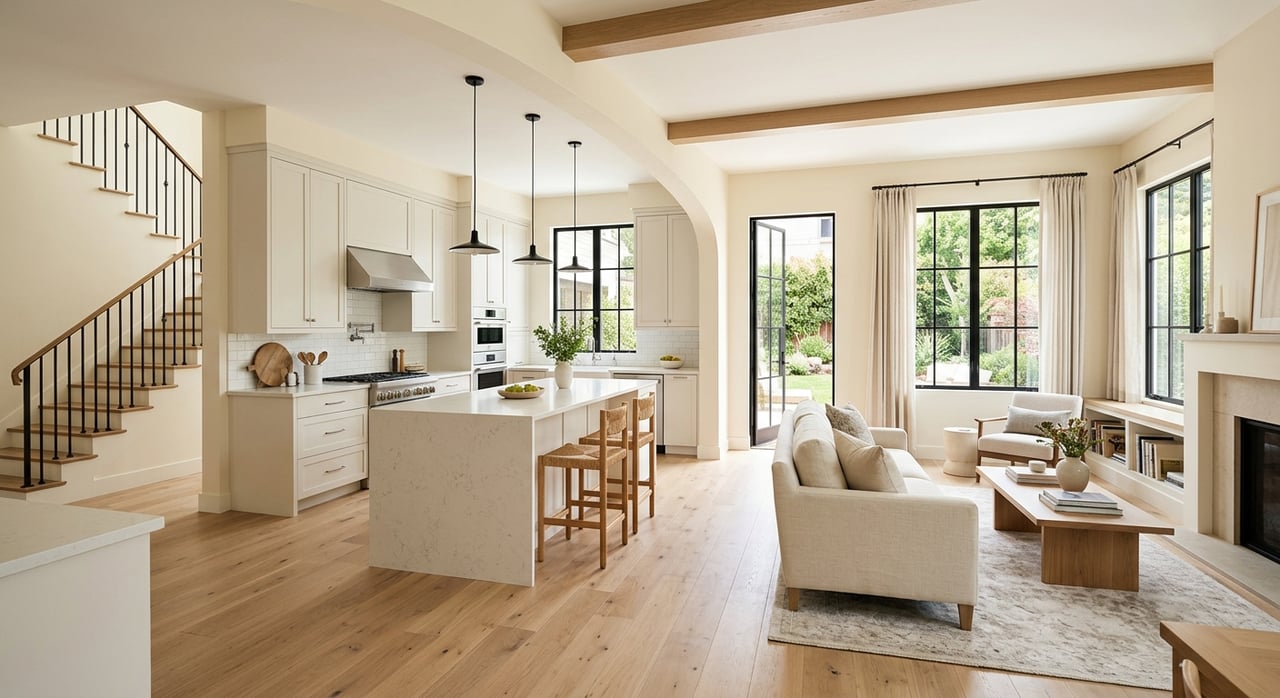
Moving From San Jose to Santa Cruz: Housing and Lifestyle
May 28, 2026
May 28, 2026
Thinking about leaving San Jose for Santa Cruz? It sounds simple on paper, but this move changes more than your zip code. You are not just trading one housing market for another. You are choosing a different pace, a different commute, and a different daily rhythm. If you want a clear picture of housing, traffic, and lifestyle before you make the leap, this guide will help you sort through the big questions. Let’s dive in.
Moving from San Jose to Santa Cruz often appeals to people who want more access to the coast, a smaller-city feel, and a lifestyle built around the outdoors. Santa Cruz is much smaller than San Jose, with a population of 62,581 compared with San Jose’s 997,368. That size difference shapes everything from traffic patterns to housing options to the feel of downtown.
In practical terms, this is usually not a move people make to save a huge amount of money. It is more often a lifestyle decision. You are choosing a coastal city with limited land, older housing stock, and a more community-oriented pace of life.
Santa Cruz is still expensive, but recent public data shows it is slightly less costly than San Jose by median sale price and rent. In March 2026, the median sale price was $1.352 million in Santa Cruz compared with $1.489 million in San Jose. Median gross rent was $2,452 in Santa Cruz versus $2,669 in San Jose.
That sounds like a noticeable gap, but the full story matters. Homes in Santa Cruz sold in about 14 days, while San Jose homes sold in about 12 days, so both markets remained competitive. If you are expecting a dramatic affordability reset, you may not find one.
Santa Cruz had a higher median price per square foot than San Jose, at $989 versus $905. That often points to smaller homes, tighter supply, and less room for the kind of outward suburban growth you see inland. In other words, your budget may buy a different kind of property, not necessarily a much cheaper one.
This is one of the biggest mindset shifts for San Jose buyers. You may give up square footage in exchange for location, access to the coast, or a different day-to-day experience. That tradeoff can feel worthwhile, but it helps to go in with clear expectations.
Santa Cruz has a mixed housing stock, not just detached houses. According to the city’s housing element data, 66.4% of units were single-family, 11.0% were in 2 to 4 unit buildings, 21.0% were in 5+ unit buildings, and 1.5% were mobile home or other. That means your search may include condos, townhome-style living, duplex-style properties, and multifamily options alongside single-family homes.
The age of the housing stock also matters. About 22% of the city’s homes were built before 1940, and many more predate 1970. If you are moving from newer parts of San Jose, you may notice more properties with character, but also more homes that need updates, repairs, or ongoing maintenance.
Accessory dwelling units are a real part of the Santa Cruz housing picture. The city allows ADUs on residential and mixed-use parcels, and they can be detached, attached, or created by converting existing legal structures. Qualifying single-family parcels can also include a junior ADU.
For some buyers, that creates flexibility. You may find properties with added living space, guest space, or rental potential already in place, or a parcel that allows future options. If that matters to you, it is smart to evaluate each property carefully because the details can vary by parcel and structure.
If Santa Cruz feels supply-constrained, there is a reason. The city’s 2023 to 2031 Housing Element sets a RHNA target of 3,736 units, which reflects ongoing housing pressure. Even when listings are available, many buyers still experience the market as limited because demand and land constraints remain part of the local reality.
That means timing, preparation, and local guidance matter. A well-planned search can help you move faster when the right property comes up, especially in a market where homes can still move quickly.
For many people moving from San Jose to Santa Cruz, Highway 17 becomes the biggest lifestyle test. Caltrans describes the Santa Cruz County segment as a mountainous divided freeway with grade changes, curves, weaving conditions, and collision history. That description alone tells you this is not a casual, low-stress daily drive.
If you need to commute back to San Jose regularly, you should treat that route as a major quality-of-life factor. The drive can be manageable for some people, but it is very different from a standard freeway corridor. Before you commit to a move, it is worth test-driving your likely schedule more than once.
Santa Cruz Metro’s Highway 17 Express is the main public transit link between Santa Cruz and San Jose. It connects Santa Cruz with Diridon Station and downtown San Jose on weekdays and weekends. Service is thinner on weekends, so you will want to check the actual timetable instead of assuming frequent departures throughout the day.
That route can be a useful option if you do not want to drive every time. It is also worth noting that Metro’s local buses connect countywide and tie into several Bay Area transit systems, which can help if you are trying to reduce car use once you are living on this side of the hill.
If you work remotely, Santa Cruz may feel much easier to pull off. QuickFacts shows 98.0% of Santa Cruz households have a computer and 95.5% have a broadband subscription, which is very close to San Jose’s 95.4% broadband rate. On the surface, that supports a work-from-home lifestyle.
Still, it is smart to verify service at the exact address you are considering. The city’s Consolidated Plan notes that some neighborhoods have limited provider choice, and many residents want more options. The city says the area is primarily served by AT&T and Comcast, with additional options from Cruzio and Charter.
The day-to-day experience in Santa Cruz is one of the biggest reasons people move here. The city manages more than 30 parks, beaches, and open spaces. Places highlighted by the city include Main Beach, Cowell Beach, Pogonip, Lighthouse Field, and DeLaveaga.
That kind of access changes how many people spend their time. You may find yourself building more of your routine around walking, surfing, trail time, beach visits, or simply being outside more often. For buyers coming from San Jose, that shift can be the real value of the move.
Downtown Santa Cruz has a different feel from a larger metro core. The city’s downtown farmers market runs weekly, and in the warmer season the Santa Cruzer shuttle connects downtown with the beach and Wharf area on weekends and holidays from Memorial Day Weekend through Labor Day. That setup reinforces a more local, connected pattern of living.
If you like the idea of a city that still feels active but less overwhelming, Santa Cruz may check that box. The tradeoff is scale. You get a smaller urban environment with a more local pulse, not the breadth of a major metro.
The coast is a major draw, but it also comes with conditions you should understand. Santa Cruz describes its climate as Mediterranean, with cool wet winters and warm dry summers. That can sound ideal, but coastal living also brings weather shifts, ocean conditions, and longer-term environmental considerations.
The city’s ocean safety guidance notes that conditions can change quickly and recommends wetsuits. Its resilience planning also focuses on erosion, extreme weather, and sea-level rise. On top of that, the city says its water supply is 100% locally sourced rainfall with storage for about one year, so drought and storm swings are part of the long-term picture.
For many people, the answer depends on what you want your life to look like, not just what you want your mortgage payment to be. Santa Cruz is still a competitive and expensive market, and your home may be smaller, older, or both. If you have to commute over Highway 17 often, that can be a serious factor.
But if you value a smaller city, stronger access to outdoor spaces, and a coastal lifestyle, Santa Cruz offers something San Jose does not. The move tends to make the most sense when you are choosing place and pace on purpose.
If you are seriously considering the move, focus on these steps early:
A move like this works best when your housing choice, work setup, and lifestyle goals all line up. That is where local guidance can make a real difference.
If you are weighing a move from San Jose to Santa Cruz, 360 Real Estate Professionals can help you compare neighborhoods, evaluate homes, and make a confident plan for your next step.
Stay up to date on the latest real estate trends.
Get assistance in determining current property value, crafting a competitive offer, writing and negotiating a contract, and much more. Contact us today.
"We are never too busy for referrals!"
360 REAL ESTATE PROFESSIONALS
4740 Scotts Valley Dr Ste E,
Scotts Valley, CA 95066
Let's socialize