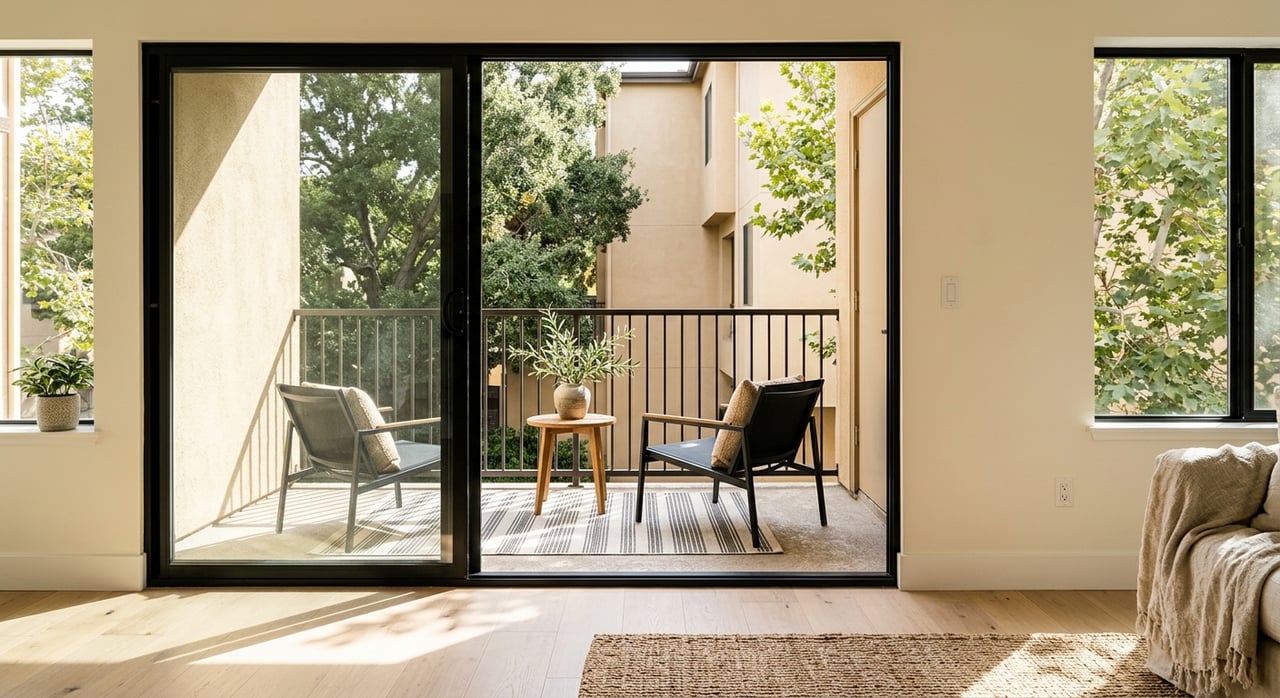
Capitola Condos for Sale Guide Before You Start Shopping
April 23, 2026
April 23, 2026
If you want a foothold in Capitola without jumping straight into single-family home prices, condos deserve a serious look. They can offer a lower entry point, access to coastal living, and amenities that simplify day-to-day ownership, but they also come with HOA rules, shared expenses, and location-specific risks that matter more than many buyers expect. Before you start touring units, it helps to understand how condo ownership works in Capitola and what details can shape your long-term costs and flexibility. Let’s dive in.
Capitola condos appeal to buyers for a simple reason: they can open the door to this coastal market at a lower price point than detached homes. Current public listing data shows 14 condo homes in Capitola with a median listing price of $649,000, while Capitola’s broader all-home median sale price reached $1.5425 million in March 2026. Based on current listings, condos remain one of the more accessible ways to buy in Capitola’s market.
That lower entry point does not mean all condos are the same. Current listings range from $499,000 for a one-bedroom unit at 1925 46th Ave #71 to $1.025 million for a larger 2-bedroom, 3-bath unit at 1066 41st Ave Unit D106, according to current Capitola condo listings. Many active options cluster in the mid-$600,000s to high-$700,000s.
One of the biggest buyer mistakes is assuming “condo” and “townhome” tell you everything you need to know. In California, a condominium is a legal ownership structure, while a townhome is an architectural style. The California Department of Real Estate explains that a condo owner holds a separate interest in the unit plus an undivided interest in the common area, and a townhome can be organized as a condo or as a planned development under different ownership structures.
That distinction matters because the ownership documents affect what you actually control. Features like patios, balconies, storage areas, and parking spaces may be deeded to you, assigned to you, or treated as exclusive-use common area. The California Department of Real Estate’s guide to residential subdivisions makes clear that buyers should verify those rights carefully instead of relying on marketing language alone.
In Capitola, current townhome supply is also much tighter. Public listing data shows just two townhomes, both around the $1 million mark, compared with a larger pool of condos that generally fall below that threshold, based on current Capitola townhome listings. If you are comparing the two, current listings suggest condos often provide the broader range of lower-price options.
When you buy into a common interest development in California, you automatically become a member of the homeowners association. The HOA typically owns, operates, and maintains common improvements and has the authority to collect assessments, according to the California Department of Real Estate. In practical terms, that means your ownership experience is shaped not just by your unit, but also by the financial health and rules of the association.
For many buyers, this is a tradeoff worth making. HOA dues can help cover major shared responsibilities and may reduce some of the upkeep you would manage on your own in a detached home. Still, those dues are a real part of your monthly housing cost, and they deserve the same level of scrutiny as your mortgage payment.
Current listing data shows HOA dues in Capitola varying quite a bit. Examples include $435 per month in a 41st Avenue condo and $680 per month in a 46th Avenue condo, with townhome examples around $465 to $500 per month, based on current property details from active listings.
Those fees may cover more than buyers expect. In current Capitola listings, HOA coverage includes items such as water, garbage, sewer, heat, exterior building repairs, landscaping, roof, insurance, reserves, and management. Amenities in active listings also include pools, spas, laundry facilities, elevators, garages or carports, greenbelts, guest parking, patios, and storage.
The key is to understand what you are getting for the monthly cost. A higher HOA fee is not automatically bad if it offsets meaningful maintenance and operating expenses. A lower fee is not automatically better if reserves are weak or major repair costs may be pushed onto owners later.
For condo buyers, due diligence on the HOA is just as important as due diligence on the unit itself. Under California Civil Code Section 4525, sellers must provide a disclosure package that includes governing documents, current assessments and unpaid assessments, unresolved violation notices, defect-related documents, approved but not yet due assessment changes, statements about rental prohibitions if any exist, requested board minutes, and the most recent Section 5551 inspection report.
That package can tell you a lot about the health of the community. It can reveal whether the HOA has deferred maintenance, upcoming cost increases, active disputes, or rules that could affect how you plan to use the property. This is one of the most important parts of buying a condo, especially if you are balancing lifestyle goals with long-term financial planning.
The Department of Real Estate also notes that HOA budgets should include cash reserves and a statement about the timing of repairs or replacement for common-area facilities. That is why buyers should look closely at reserve strength and the possibility of special assessments before removing contingencies. Your monthly cost is not just principal and interest. It may also include HOA dues, insurance, and potential assessment risk.
Condo listings often highlight attractive extras like balconies, patios, parking spaces, storage closets, or garages. Those features are valuable, but you should confirm exactly how they are classified in the governing documents. In California condo projects, some of these spaces may be exclusive-use common area rather than fee-simple ownership.
That distinction can affect maintenance responsibility, control, and future changes allowed by the association. If a parking space or storage area is important to your decision, make sure it is documented clearly. This step is especially important in a market like Capitola, where parking convenience and beach access can strongly influence daily livability.
Capitola condo living is often about choosing the right balance of convenience, setting, and ownership costs. Based on the current listing mix, some units are marketed for their ability to walk or bike to Capitola Village and the beach, while others around 41st Avenue or Capitola Del Mar emphasize garages, parking, greenbelts, and a more traditional community setting, according to current condo listings in Capitola.
That does not create a hard rule for every property, but it does highlight a useful pattern. In general, a more beach-adjacent location may come with stronger lifestyle appeal and more intensive due diligence. Slightly inland complexes may offer more practical features like parking, storage, and shared amenities.
Here is a simple way to think about that tradeoff:
| Priority | You may prefer |
|---|---|
| Walkability to Village and beach | Beach-adjacent condo locations |
| More parking or storage | Slightly inland complexes |
| Shared amenities like greenbelts or pools | Larger community settings |
| Lower-entry pricing compared with townhomes | Condo inventory under $1M |
This is one of the biggest Capitola-specific considerations. Capitola’s coastal hazard planning identifies seismic shaking, liquefaction, tsunamis, landslides, flooding, and bluff or beach erosion in the coastal zone. The city specifically identifies the Village, the Soquel Creek mouth and banks, and Noble Gulch as liquefaction areas, and notes that lowlands along Soquel Creek and much of the Village lie within the 100-year floodplain, according to the City of Capitola coastal hazard planning documents.
The same city document notes that wave events periodically overtop the seawall and flood the Village, and it describes ongoing bluff retreat along the shoreline and Cliff Drive corridor. If you are considering a condo near the beach or Village, you should treat hazard review as a standard part of your buying process, not an afterthought.
FEMA also notes that properties in a Special Flood Hazard Area face at least a 26% chance of flooding over a 30-year mortgage, and that most homeowners insurance does not cover flood damage. Their coastal flood guidance is a good reminder to verify flood map status and budget separately for flood insurance if needed.
Some buyers shop for a Capitola condo with a second-home or future-rental strategy in mind. If that is part of your plan, do not assume every condo offers the same flexibility. California law limits some HOA rental restrictions, but associations can still prohibit short-term rentals of 30 days or less, as outlined in the California Civil Code provisions on common interest developments.
That means your intended use needs to match the HOA’s governing documents. If you think you may rent the property later, review the CC&Rs early and with a clear strategy in mind. It is much better to confirm the rules before you write an offer than to discover restrictions after closing.
Before you shop seriously in Capitola, keep your focus on these key questions:
A condo can be a smart way to buy into Capitola, but the best purchase is usually the one that fits both your lifestyle and your risk tolerance. When you understand the ownership structure, the HOA, and the location-specific factors, you can shop with much more confidence.
If you are weighing condo options in Capitola and want clear, local guidance on price points, HOA due diligence, and how different locations may fit your goals, connect with 360 Real Estate Professionals. Their team brings a relationship-first, full-service approach to helping you navigate Santa Cruz County real estate with confidence.
Stay up to date on the latest real estate trends.
Get assistance in determining current property value, crafting a competitive offer, writing and negotiating a contract, and much more. Contact us today.
"We are never too busy for referrals!"
360 REAL ESTATE PROFESSIONALS
4740 Scotts Valley Dr Ste E,
Scotts Valley, CA 95066
Let's socialize